Why Liability Deserves Attention Before You Launch
A day on the water can change quickly when a passenger falls, a towline crosses another boat’s path, or a wake pushes a vessel off course. For Long Island boaters, liability coverage is the part of a policy that may help with covered claims alleging bodily injury or property damage caused by the insured boat or its operation. The details matter: towing a skier or tube, inviting guests aboard, and navigating crowded channels can create different questions about who was operating, what activity was underway, and whether a policy exclusion applies. Understanding those questions before heading out can help you choose limits and practices that fit the way you actually use your boat.
Long Island’s Mix of Boating Conditions
Long Island boating ranges from open-water trips to busy bays, inlets, marinas, and narrow approaches where traffic and changing conditions demand attention. A family outing near the South Shore may include swimmers, personal watercraft, fishing boats, and vessels returning to harbor at the same time. On a holiday weekend, a route that feels manageable on a quiet morning can become crowded, with wakes and limited maneuvering room. Liability exposure is not determined by location alone, but local traffic patterns make planning especially important. Check marine forecasts, charted hazards, no-wake zones, and current rules for your planned route, then consider whether your policy’s limits and permitted-use wording match that activity.
Towing a Skier or Tube Changes the Risk
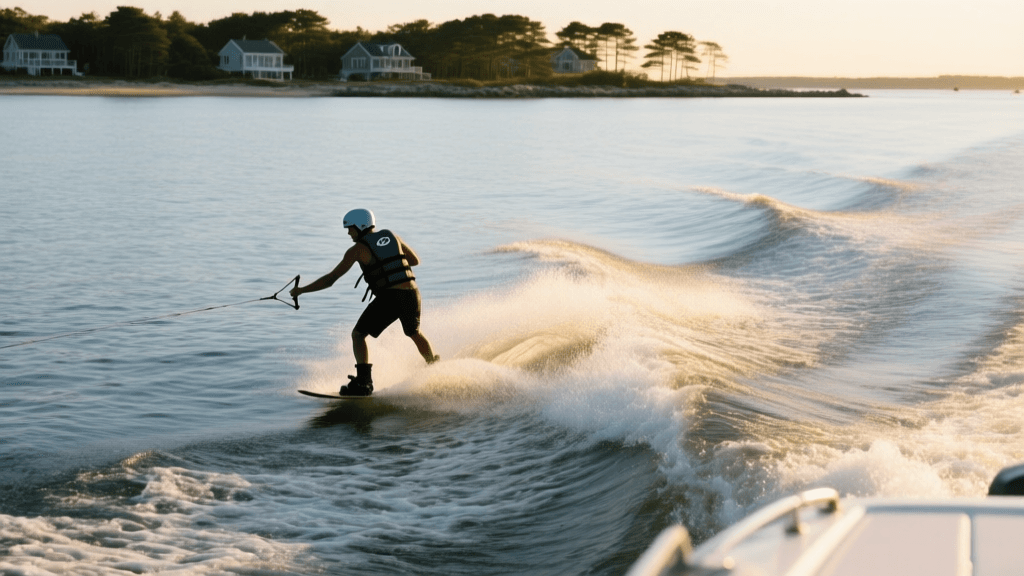
Towing adds a person in the water, a towline, and another set of decisions to the operation of a boat. Before assuming a policy covers tubing, water skiing, wakeboarding, or similar activities, ask the insurer to confirm how the policy treats each one. Review definitions of covered watercraft use, exclusions for racing or high-risk activities, and any requirements for an observer or safety equipment. For example, a boat owner who regularly pulls a tube in a designated area should describe that use accurately rather than relying on a policy written around occasional cruising. Keep a proper lookout, use an observer when required, brief riders on hand signals, and stop towing when visibility, traffic, or weather makes the activity unsafe.
Passengers, Guests, and Responsibility Aboard
Carrying friends or relatives may seem routine, but a passenger injury can lead to questions about the boat’s condition, the operator’s decisions, and the circumstances of the incident. Liability coverage may respond to covered allegations, subject to the policy’s terms, exclusions, and limits; it does not automatically cover every injury or every person. Read how the contract defines an insured person, guest passenger, and covered watercraft, and ask whether household members or regular operators are treated differently. Before leaving the dock, confirm that the vessel is not overloaded, required life jackets are available and fitted, and guests know where to sit and how to move safely. A short safety briefing helps reduce avoidable confusion underway.
Busy Waterways Call for Clear Operating Habits
In congested water, an ordinary maneuver can affect several nearby vessels. Maintain a safe speed, keep a proper lookout, follow navigation rules, and leave room for boats that need space to turn or pass. Be especially cautious near marinas, launch areas, channels, and places where swimmers or towed riders may be present. Alcohol can impair judgment and may create serious legal and coverage complications; never operate while impaired, and designate a sober operator for the outing. A claim may turn on the facts, not just the location, so accurate incident details matter. If a collision or injury occurs, prioritize medical assistance and safety, exchange required information, and document what happened without guessing about fault.
Read the Exclusions and Limits, Not Just the Premium
A low premium does not tell you whether a policy suits your boating activities. Review the liability limit, deductible where applicable, territorial or navigation limits, and exclusions that may affect your boat or use. Ask specifically about towing people, watersports, paid or commercial use, racing, inexperienced operators, and use of a personal watercraft. Check whether the policy requires listed operators, approved safety equipment, or particular operating conditions. Also understand whether defense costs are handled within or outside the liability limit, because that can affect the amount available for a covered settlement. Policy wording differs, so request explanations in writing and compare equivalent limits and terms rather than comparing price alone.
Local Considerations for Long Island Boaters
Long Island residents may keep a boat near home and travel to different launch points, bays, or marinas over the season. Someone based in Plainview, Hicksville, or Bethpage might trailer to the coast, while boaters closer to Huntington, Massapequa, or Wantagh may use nearby waters more regularly. The important insurance question is whether the policy’s navigation area and declared use fit the actual trips, not simply where the owner lives. Before a seasonal launch, verify that the boat, motor, operators, and towing activities are accurately described. New York boating and navigation requirements can apply alongside the insurance contract, so check current state and local rules for safety equipment, operator requirements, and restricted areas.
A Practical Review Before Your Next Outing
Questions to Check
- Does the policy explicitly address tubing, skiing, wakeboarding, or other towing activities you plan to do?
- Are all regular operators identified and eligible under the policy, and are there age or experience restrictions?
- Do the liability limits reflect the number of passengers and the type of boating you regularly do?
- Are navigation boundaries, seasonal storage, and trailer use consistent with your real trips?
- What exclusions apply to impaired operation, racing, commercial use, or failure to follow stated safety conditions?
- Who should be contacted after an incident, and what records or documents should be kept?

What to Do Next
Start with the policy declarations and the full contract, then list how the boat is actually used: where it travels, who operates it, how many guests usually come aboard, and whether anyone is towed. Ask a licensed insurance professional to explain unclear language, confirm whether specific activities are covered, and show how changing the liability limit affects the premium. Compare policies on the same basis, including exclusions, navigation limits, operator rules, and claims procedures. Revisit the review when you buy a different boat, add a regular operator, begin towing, or change where you launch. These steps cannot prevent every accident, but they can help you make a better-informed coverage decision before the next Long Island boating day.
Review Your Boat Liability Coverage
Compare policy terms and ask a licensed professional how your Long Island boating activities fit the coverage.
Get a Free Quote