Start With Safety and a Clear Record
A damaged boat can turn a routine day on the water into a stressful claims process. Whether a collision happened near a Long Island marina or a stored vessel was damaged by a storm, the first priorities are safety, preventing additional loss, and creating a reliable record. Check for injuries and immediate hazards before approaching the boat, and contact emergency services when the situation calls for it. Once it is safe, photograph the damage from several angles, note the date and location, and write down what happened while details are fresh. This guide explains how comprehensive and collision claims generally work and what Long Island owners can do to keep the process organized.
How Comprehensive and Collision Claims Differ
Collision coverage generally applies to physical damage caused by a collision with another boat or object, subject to the policy’s definitions and exclusions. Comprehensive coverage generally addresses certain non-collision losses, such as theft, fire, vandalism, or damage from a covered weather event. The exact division depends on the wording of the individual policy, including navigation limits, covered property, and any special conditions. For example, a boat striking a submerged object may be evaluated differently from a vessel damaged while moored during a storm. Keep in mind that coverage is not guaranteed simply because damage occurred; the cause, policy terms, and deductible all matter. Report the facts accurately and let the insurer determine how the loss is classified.
Document the Incident Before Conditions Change
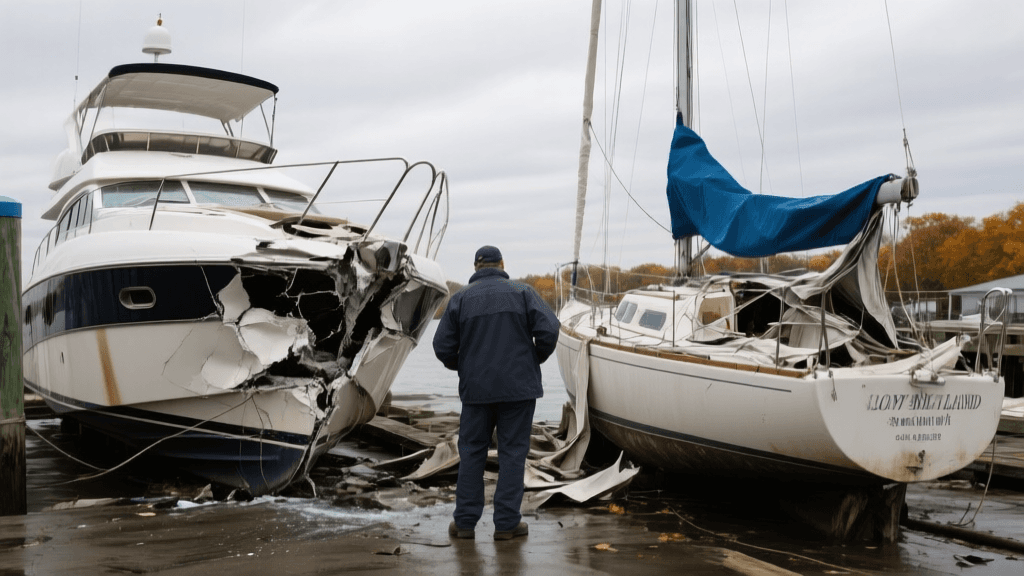
Good documentation gives the adjuster a clearer picture of the loss and can help avoid confusion later. Take wide photographs that show the boat’s position and surroundings, then close-ups of cracks, scrapes, broken fittings, water intrusion, or damaged equipment. Photograph the hull identification number and any affected accessories or electronics when practical. Save marina, towing, launch, or storage receipts, and gather contact details from witnesses or other boat operators involved. If a storm or storage incident occurred, record where the boat was kept and how it was secured, and preserve relevant weather or marina notices if available. Do not discard damaged parts or authorize permanent repairs until you have asked the insurer whether an inspection is needed.
Notify the Insurer and Keep Communication Organized
Report the incident as soon as reasonably possible using the contact method and process described in the policy. Provide a concise account of when and where the loss happened, what you observed, and what steps you took to protect people and property. Avoid guessing about the cause if you are unsure; distinguish what you directly saw from what you learned afterward. Keep a simple claim log with the date, person spoken to, questions asked, and any documents requested. Send photographs, receipts, and written statements through the insurer’s approved channel, and keep copies for your records. If a boat is at a marina, repair yard, or storage facility, coordinate access and inspections while confirming who is responsible for authorizing work.
Understand the Repair Estimate and Inspection
An adjuster may inspect the vessel, review photographs, or ask for a repair estimate before the claim can be evaluated. A written estimate should identify the damaged components, labor, parts, and any related work needed to restore the boat. Ask the repair facility to separate damage that appears connected to the incident from pre-existing wear or unrelated maintenance. If a shop discovers hidden damage after removing a component, document it with photographs and contact the adjuster before proceeding with additional work. Estimates can differ because shops may use different labor rates, repair methods, or parts assumptions. Request clarification when an item is missing or unclear, and keep communications factual. The final payment process depends on policy terms and the insurer’s claim determination.
Plan for Your Deductible and Out-of-Pocket Costs
A deductible is the amount the policyholder is generally responsible for paying toward a covered loss, as defined by the policy. Check whether the policy applies separate deductibles to different types of losses and whether any special storm or named-storm conditions apply. Compare the likely covered repair amount with the deductible, but do not assume that the first estimate will capture every necessary repair. Also ask how the insurer handles sales tax, towing, emergency measures, personal effects, and upgrades, since these can be treated differently from direct boat repairs. If you are considering paying for a small repair yourself, ask how a claim inquiry or formal filing will be recorded before making that decision. Keep receipts for reasonable steps taken to protect the boat from further damage.
Long Island Considerations for Boating and Storage Losses
Long Island’s mix of marinas, bays, harbors, and seasonal storage creates different claim situations. A vessel used around Huntington Harbor may face a different incident scenario from one kept inland near Plainview, Hicksville, Bethpage, Syosset, or Woodbury. During the boating season, collisions, grounding, and dock damage can require prompt documentation while a boat is still at the water. Off-season, owners may need to record storage conditions, winterization steps, and any facility communications after a storm or break-in. Areas such as Massapequa and Wantagh have their own waterfront activity and local access considerations. These details do not determine coverage by themselves, but they can help explain where the boat was, how the loss occurred, and what follow-up is needed.
Claim Steps to Keep in Mind
- Put safety first, report urgent hazards, and take reasonable steps to prevent additional damage without putting anyone at risk.
- Photograph the vessel, surrounding area, damaged components, and identification details before cleanup or repair changes the evidence.
- Notify the insurer promptly, describe only what is known, and keep a dated record of claim conversations and document submissions.
- Ask whether an inspection or repair approval is needed before authorizing permanent work, especially when hidden damage may be present.
- Review the applicable deductible and policy terms, and keep estimates, receipts, and written explanations together.

Prepare for the Next Step
Before speaking with an adjuster or repair facility, gather the policy information, incident notes, photographs, receipts, and any estimates already received. Write down the questions that matter most: which coverage is being evaluated, what deductible applies, whether an inspection is required, and how to handle newly discovered damage. If the boat is stored or repaired outside your home community, confirm who can provide access and whether the facility needs written authorization. Owners in Melville, Farmingdale, Jericho, Levittown, and other Long Island communities can use the same basic recordkeeping approach, while checking their own policy for specific deadlines and requirements. Careful documentation does not guarantee a particular outcome, but it can make the claim easier to explain and help keep decisions grounded in the policy and the evidence.
Review Your Boat Coverage Before the Next Trip
Compare your policy’s covered losses, deductibles, navigation limits, and claim instructions so you know what information to gather if damage occurs.
Get a Free Quote