Why Review Boat Coverage Before the Season?
Before launching for another boating season, take time to confirm that your policy still fits the boat you own and the way you plan to use it. A boat that spent winter ashore may have new equipment, repairs, or a different market value, while your planned routes or storage arrangements may have changed. In Long Island, NY, spring preparations often involve more than checking the engine and safety gear: owners should also review comprehensive coverage, navigation limits, deductibles, and storm terms. A careful review can surface questions while there is still time to clarify them, rather than after a loss or a last-minute trip plan.
Why Spring Conditions Matter on Long Island
Long Island’s boating environment can change considerably between winter storage and the first launch. A boat may move from a yard or driveway to a marina, then travel through bays, inlets, and coastal waters. Each transition can affect how the policy applies, particularly if the stated storage location or navigation area no longer matches reality. Spring weather can also bring strong winds and unsettled conditions before the more predictable summer pattern arrives. Comprehensive coverage generally addresses certain non-collision losses, such as theft or specified weather damage, subject to the policy’s wording, exclusions, limits, and deductible. Do not assume a familiar policy automatically covers every new arrangement.
Confirm the Boat’s Insured Value and Equipment
Start by comparing the policy’s insured value with the boat’s current condition and equipment. Check the hull, engine, trailer, electronics, navigation devices, safety equipment, and any recent upgrades or repairs. Keep invoices, photographs, serial numbers, and service records together; these details can help document what was aboard if a covered loss occurs. Ask whether the policy settles a total loss using agreed value, actual cash value, or another method, and confirm how depreciation and partial repairs are handled. For example, a new chartplotter added during winter may not be adequately reflected if equipment limits are low or the item was never reported. Be precise about what is included and how it is valued.
Check Navigation Limits Against Your Real Plans
Navigation limits describe where a boat is permitted to operate under the policy, and they may be narrower than an owner expects. Read the stated territory and ask how it applies to your likely routes, including travel through Long Island Sound, Great South Bay, or nearby coastal waters. If you expect to take longer trips, cross into unfamiliar waters, or keep the boat at a different marina, raise those plans before departure. A weekend route that seems routine can still cross a policy boundary. Confirm whether the policy requires advance notice or written approval for trips beyond its normal navigation area, and keep any written clarification with your policy documents.
Review Storage, Theft, and Lay-Up Details
The policy should reflect where the boat is kept during both the off-season and active months. Confirm the listed marina, storage yard, home address, or other location, and ask whether moving the boat between these places changes any conditions. Review requirements for locks, alarms, trailer security, winterization, or unattended-boat precautions if the policy includes them. Also check whether a lay-up period limits operation during certain months and whether that restriction ends automatically or requires notice before launch. A boat stored near Plainview over winter and moved to a Huntington-area marina for summer use has a different exposure than one kept in a single location year-round. Accurate details help prevent surprises when reporting a claim.
Understand Storm Terms Before Severe Weather
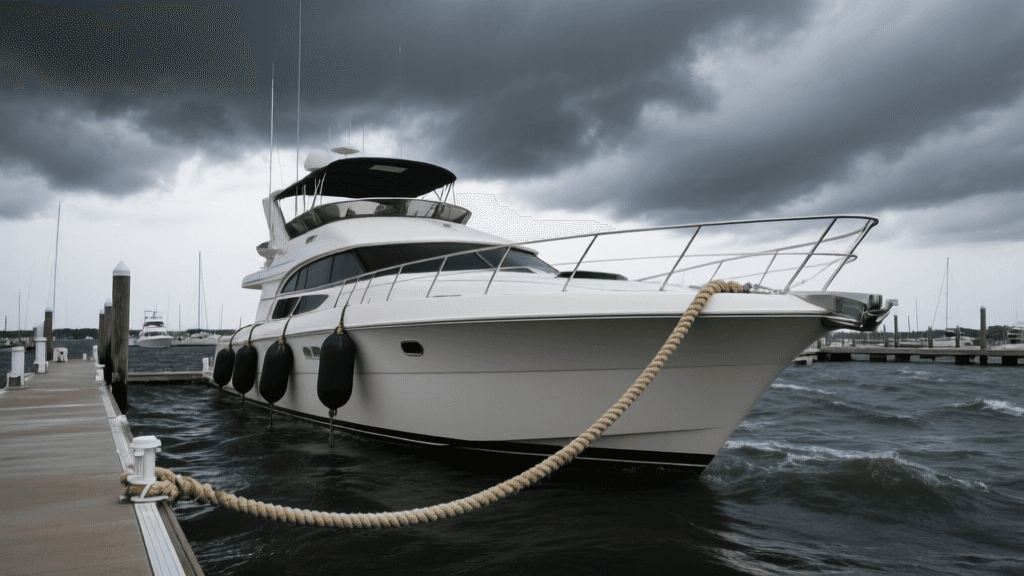
Storm-related protection is not one universal benefit; the specific policy determines what losses are covered and what steps are required. Read the sections addressing wind, named storms, hurricanes, hauling, mooring, and deductibles. Some policies may impose a separate or percentage-based storm deductible, restrict movement during a defined period, or require the owner to follow a written storm plan. Ask what counts as a covered loss, whether damage from flooding or storm surge is treated differently, and whether separate flood coverage may be needed. Long Island owners should also know where the boat is expected to be secured when severe weather approaches. Confirm requirements well before a forecast creates limited time and crowded haul-out schedules.
Make the Review Fit Your Long Island Routine
A useful review accounts for how and where you actually boat, rather than relying on a generic checklist. Someone launching near Massapequa or Wantagh may have different day-to-day routes and storage arrangements from an owner keeping a boat near Huntington or Melville. Even if you live inland in Hicksville, Bethpage, Syosset, Woodbury, Jericho, Levittown, or Farmingdale, the boat’s marina, navigation area, and storm plan still shape the relevant questions. Write down the launch location, usual waters, planned trips, storage sites, and any equipment changes. Then compare those facts with the policy declarations and endorsements, and request clarification wherever the written terms do not match your plans.
A Practical Pre-Launch Review
- Confirm the insured value, settlement basis, hull details, engine information, and limits for electronics or other equipment.
- Compare the policy’s navigation territory with the waters and destinations planned for the season.
- Verify winter and summer storage locations, lay-up dates, security conditions, and any required notice before launch.
- Read storm deductibles and written requirements for mooring, hauling, movement, and severe-weather preparation.
- Save current photographs, receipts, maintenance records, policy documents, and written answers to coverage questions.

What to Do Before Launch Day
Begin the review several weeks before your intended launch, especially if you need to change storage, adjust navigation territory, or clarify storm requirements. Gather the declarations page, endorsements, registration details, recent photographs, upgrade receipts, and your planned routes. Ask focused questions and request written explanations for any important condition or limit; a verbal summary may not make the policy’s exact terms clear. If comparing options, evaluate more than the premium: compare insured value, deductibles, exclusions, equipment limits, navigation boundaries, and claim settlement provisions. Coverage varies by insurer and contract, so read the issued policy and consult a licensed insurance professional about your circumstances. A timely review helps you make an informed decision before the boat returns to the water.
Prepare for a Confident Launch
Gather your policy and boat records, then compare coverage details and clarify any seasonal questions before setting out.
Get a Free Quote