Why Pollution Liability Deserves a Closer Look
A small fuel or oil release can become an expensive problem quickly, even when it was accidental. Boat pollution liability is a part of some marine insurance policies that may help pay certain costs or claims arising when pollutants escape from a covered vessel. The important word is “may”: the covered event, substances, cleanup expenses, and limits vary by policy. For Long Island boat owners, spills can occur at a marina, launch ramp, mooring, or while underway in local waters. Reviewing this coverage before boating season helps clarify whether a policy responds to sudden discharges, slow leaks, or third-party claims, and where the owner may still face out-of-pocket costs.
How Limits and Cleanup Costs Interact
A liability limit is the most the insurer will pay for a covered claim, subject to the policy’s terms. Pollution wording may use a separate limit, apply the general watercraft liability limit, or impose a sublimit for cleanup or related expenses. Those distinctions matter because the bill can include more than removing visible fuel: response contractors may contain a slick, recover contaminated material, transport waste, and document the work. For example, a modest discharge near a crowded dock could require prompt professional response and create claims from affected boat owners or a marina. Ask whether cleanup is inside or in addition to the stated limit, whether legal defense reduces that limit, and whether one limit applies per occurrence or across the policy period.
What Counts as a Pollutant or Covered Discharge?
Policy definitions determine which substances and events qualify. Fuel and lubricating oil are common concerns, but wording may define pollutants broadly or list particular substances. A discharge clause may require an accidental, sudden, or unintended release, and it may distinguish pollution from ordinary wear, maintenance, or disposal. Do not assume that every spill involving a boat automatically triggers coverage. Check whether the insured vessel must be the source, whether the event must occur during the policy period, and whether a release while the boat is stored or being serviced is treated differently. When language is unclear, request the full policy form and written clarification from the insurer or licensed insurance professional before relying on an interpretation.
Why Gradual Leaks Can Be Different
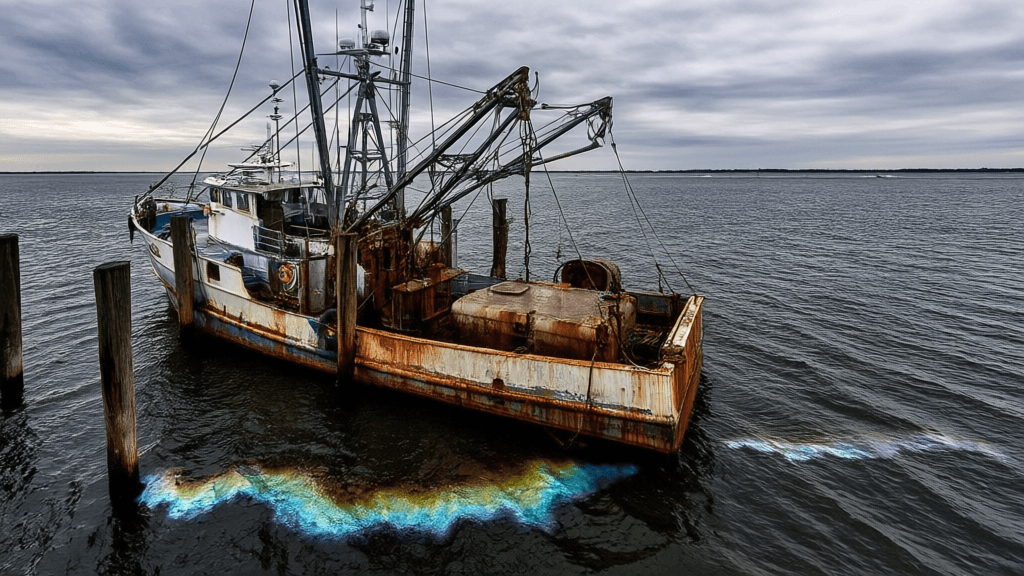
A sudden hose failure and a slow seep from a deteriorating fitting may be treated differently. Some policies restrict or exclude pollution that occurs gradually, over time, or because of a known maintenance problem. That can leave a gap if a fuel odor or sheen develops over several days before anyone identifies the source. Owners can reduce uncertainty by checking bilges and fuel systems routinely, keeping maintenance records, and addressing unusual odors, discoloration, or sheen promptly. If a leak is discovered, stop the source only when it is safe, avoid discharging contaminated water, and contact appropriate emergency or environmental authorities as required. Report the incident to the insurer promptly and preserve photographs, repair records, and response invoices.
Compare Exclusions, Conditions, and Sublimits
Comparing only the headline liability limit can hide meaningful differences. Read the pollution exclusion and any exception that restores limited coverage, then check how the policy defines cleanup, pollutants, accidental discharge, and covered vessels. Look for exclusions involving gradual seepage, intentional releases, failure to maintain equipment, contractual liability, or pollution arising during repair or storage. Also note notice requirements, cooperation duties, deductibles, and whether an insurer must approve a contractor before costs are incurred. Two policies with similar premiums may respond differently because one includes emergency cleanup expenses while another applies a smaller sublimit. Keep a copy of the relevant forms with the boat’s records so the details are accessible when a time-sensitive incident occurs.
Long Island Boating Makes Local Preparation Important
Long Island’s mix of marinas, bays, harbors, and busy recreational boating areas means a release may affect more than the boat itself. A spill near neighboring vessels or waterfront facilities can prompt rapid containment and cleanup, while the route to a launch or storage yard may involve different operators and responsibilities. Owners based in Plainview, Hicksville, Bethpage, Syosset, Woodbury, Jericho, Levittown, Farmingdale, Melville, Huntington, Massapequa, or Wantagh may keep boats at facilities elsewhere on the Island, so confirm that the policy’s navigational and storage provisions match actual use. Do not assume a Long Island location automatically determines the applicable rules; response duties can depend on the waterway, spill circumstances, and authorities involved.
A Practical Policy Review Checklist
Questions to Ask Before Choosing Coverage
- What is the pollution liability limit, and is there a separate limit or sublimit for cleanup?
- Are emergency response and remediation expenses included, and do they reduce the liability limit?
- Does coverage require a sudden accidental discharge, and how does the policy treat gradual leaks?
- Which substances are included in the definition of pollutants, and are any common boat fluids excluded?
- Do storage, repair, maintenance, or marina-related circumstances change the coverage?
- What notice and approval steps apply if a spill occurs, and which records should be retained?

Next Steps for Boat Owners
Start with the declarations page, then locate the full liability, pollution, and exclusion wording; a summary alone may not explain the conditions that control a claim. Write down the vessel’s storage location, usual operating area, fuel and engine details, and any recent repairs so a coverage review reflects how the boat is actually used. Compare at least the limit, cleanup treatment, gradual-release language, and reporting requirements, and ask for unclear terms to be explained in writing. Coverage cannot prevent a spill, so pair policy review with routine maintenance and a response plan. This guide offers general information, not a determination of coverage; the policy contract and applicable law govern a specific incident.
Review Your Boat Pollution Liability Before Launch
Compare policy limits, cleanup provisions, and exclusions with a licensed insurance professional before the next boating season.
Get a Free Quote