Why Liability Coverage Matters Around Long Island Marinas
A routine trip from a Long Island marina can involve close quarters: backing out of a slip, passing moored boats, or maneuvering near a busy dock. If a boat strikes another vessel, damages marina property, or injures someone, the resulting costs can be significant. Boat liability coverage is designed to help with covered claims when an insured operator is legally responsible for bodily injury or property damage. The details depend on the policy, including its limits and exclusions. This guide explains the exposures marina and harbor boaters should consider and what to check before launching or leaving a boat in a slip.
What Boat Liability Insurance Does—and Does Not—Mean
Liability coverage is different from physical damage coverage. Liability may help pay for covered injury or damage to someone else's property, while hull or physical damage coverage is generally intended for damage to the insured boat, subject to its terms. A claim is not automatically covered simply because it happens on the water: the policy's definition of an insured person, covered watercraft, navigation area, and covered loss all matter. Some policies also address legal defense costs, but the treatment of those costs varies. Read the contract rather than relying on a short summary, and ask a licensed insurance professional to explain unfamiliar wording.
Common Risks Near Docks, Swimmers, and Other Boats
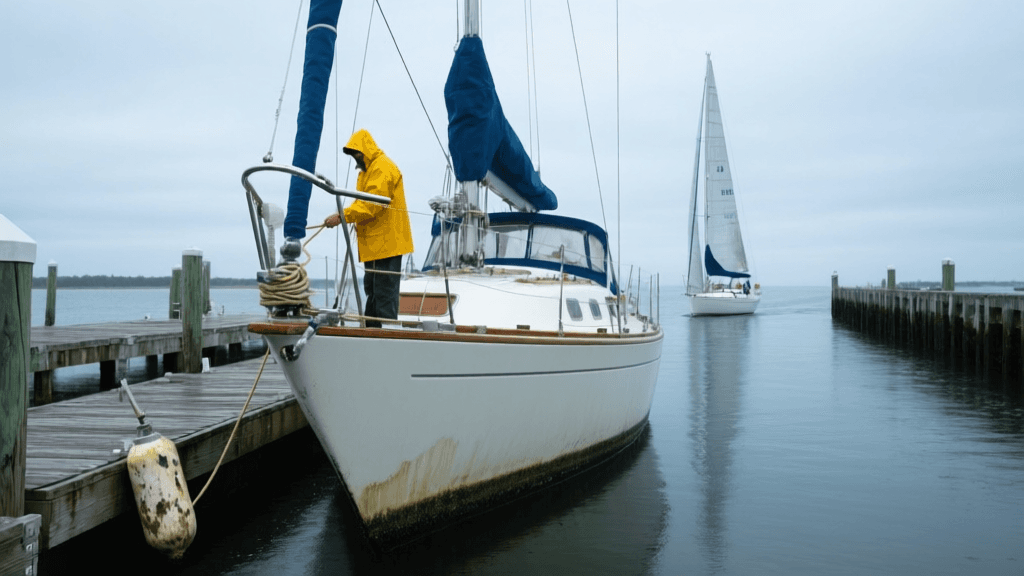
In a crowded slip, a gust of wind or a misjudged turn can push a boat into a neighboring hull, piling, or dock. A wake can loosen another vessel's lines or cause it to collide with a dock, while a passenger moving between boats may fall during boarding. Swimmers and people working around the marina create additional injury exposures, especially where boats are moving slowly but visibility is limited. These examples do not mean a boater is automatically legally responsible; fault and coverage depend on the facts and policy. Reduce avoidable risk by moving at a controlled speed, keeping a lookout, following posted marina rules, and using a spotter when maneuvering in tight quarters.
Review Limits, Covered Operators, and Navigation Area
A useful policy review starts with the liability limit and who qualifies as an insured operator. Check whether the policy covers a spouse, household member, or another person who may occasionally take the helm, and whether any operator restrictions apply. Confirm that the listed boat, engine, and intended use are accurate. Navigation limits matter, too: a policy may specify where the boat can operate, and trips beyond that area could raise coverage questions. Ask how bodily injury and property damage are defined, whether defense costs reduce the stated limit, and what exclusions apply. Compare the terms against the way the boat is actually used, not just how it was used when the policy began.
Check Marina Agreements Before Mooring
Marinas may set insurance conditions in a slip lease, storage agreement, or other written rules. The agreement could request proof of liability coverage, specify a minimum limit, or describe responsibilities for damage to docks and other facility property. Requirements are not identical from one facility to another, so do not assume a policy accepted at one location will satisfy another marina. Read the current agreement, note any renewal or documentation deadlines, and ask the marina to clarify wording that is unclear. Then compare those requirements with the declarations page and policy terms. A certificate or proof of insurance documents coverage information, but it does not change the policy itself.
Prepare for Launch and Keep Good Records
Before the first outing, confirm that the policy is active and that the boat's description and listed operators remain accurate. Keep proof of coverage accessible, along with emergency contacts and the marina's reporting instructions. Inspect dock lines, fenders, navigation lights, steering, and safety equipment; maintenance cannot prevent every accident, but it can reduce some hazards. Make sure each operator understands local marina speed rules and knows how to respond if a collision or injury occurs. After an incident, prioritize safety, contact emergency services when appropriate, exchange information, and document the scene when safe. Report the event promptly according to the policy's instructions, without guessing about fault.
Long Island Conditions Make Local Planning Important
Long Island boaters may move between sheltered marina basins, open bays, and busier channels, where traffic, wind, and wake conditions can change quickly. Summer weekends often bring more vessels and people near docks, while changing weather can make returning to a slip more difficult than leaving it. The same basic liability questions apply whether a boat is moored near Huntington, Massapequa, Wantagh, or another community, but each facility may have its own agreement and operating rules. Boaters based inland in Plainview, Hicksville, Bethpage, Syosset, or nearby areas should also plan for where the boat will actually be stored and operated. Match coverage to the real boating routine and verify the policy's navigation limits.
Questions to Ask When Comparing Coverage
A Practical Policy Review
- What liability limit applies to bodily injury and property damage, and how are defense costs handled?
- Which household members, guests, or other operators are covered, and are any operators excluded?
- Does the policy cover the boat's actual size, engine, use, and intended navigation area?
- What exclusions, deductibles, or special conditions could affect an accident at a dock or marina?
- Does the marina agreement require specific limits or proof of coverage before the boat can use a slip?
- Would an umbrella policy provide additional protection, and how would its terms coordinate with boat coverage?

Next Steps Before Your Next Trip
Gather the boat's current policy documents, registration details, and marina agreement, then check them together. Write down questions about liability limits, covered operators, navigation boundaries, and claims procedures. If the boat, engine, storage location, or regular operator has changed, ask whether the insurer needs updated information. Compare quotations using the same limits and coverage assumptions so the differences are meaningful; a lower premium alone does not show that two policies offer equivalent protection. A licensed insurance professional can explain available options and clarify terms, but the policy contract governs coverage. Reviewing these details before launch gives Long Island boaters a clearer understanding of how coverage may respond if an accident occurs.
Review Your Boat Liability Coverage
Compare policy limits and marina requirements before your next Long Island boating trip.
Get a Free Quote