What Medical Payments Coverage Means for Long Island Boaters
An onboard injury can turn a pleasant day on the water into a scramble to arrange care, notify the right people, and understand who may pay the bills. Boat medical payments coverage, often called MedPay, can help pay certain reasonable medical expenses for eligible injured people after a covered boating accident, without first requiring a decision about who was at fault. The coverage is subject to the policy’s definition of an insured accident, covered people, exclusions, and dollar limit. For Long Island boaters navigating busy waterways, this guide explains what to check, what to document, and how MedPay differs from liability coverage and health insurance.
Why Coverage Details Matter on Long Island Waters
Long Island boating can involve everything from calm outings near a marina to crowded summer traffic in bays, harbors, and other coastal waters. A passenger may be hurt after a sudden wake, a slip on a wet deck, a hard docking, or a collision. The injury could require a clinic visit, emergency care, imaging, or follow-up treatment, and the policy’s MedPay limit may be modest compared with the total bill. Do not assume that every person aboard or every type of injury qualifies. Before launching, review the declarations page and policy wording, including who is covered, whether the boat must be in use, how expenses are defined, and when notice is required.
How Medical Payments Coverage May Help
MedPay is generally intended to address eligible medical expenses after an insured boating accident, up to the selected limit. Depending on the policy, covered expenses may include services such as ambulance transportation, emergency treatment, hospital care, or follow-up medical services. The precise list and time period for treatment vary, so the policy—not a general description—controls. For example, if a passenger is thrown off balance when a boat encounters a wake and needs an evaluation, MedPay may provide a way to submit eligible bills without waiting for a fault investigation. It does not automatically pay every expense, replace lost wages, or guarantee that a claim will be approved.
MedPay, Liability Coverage, and Health Insurance Are Different
Boat medical payments coverage and bodily injury liability serve different purposes. MedPay may help with eligible medical expenses for covered injured people regardless of fault, within its limit and terms. Liability coverage is generally intended to respond when the insured is legally responsible for bodily injury or property damage to another person; it may involve investigation and a determination of legal responsibility. Personal health insurance may also cover treatment, but deductibles, copayments, network rules, and coordination with other coverage can apply. These policies do not necessarily pay the same bills in the same way. Read each policy and ask the relevant insurer how claims should be submitted; avoid assuming that one coverage cancels or replaces another.
What to Do and Record After an Onboard Injury
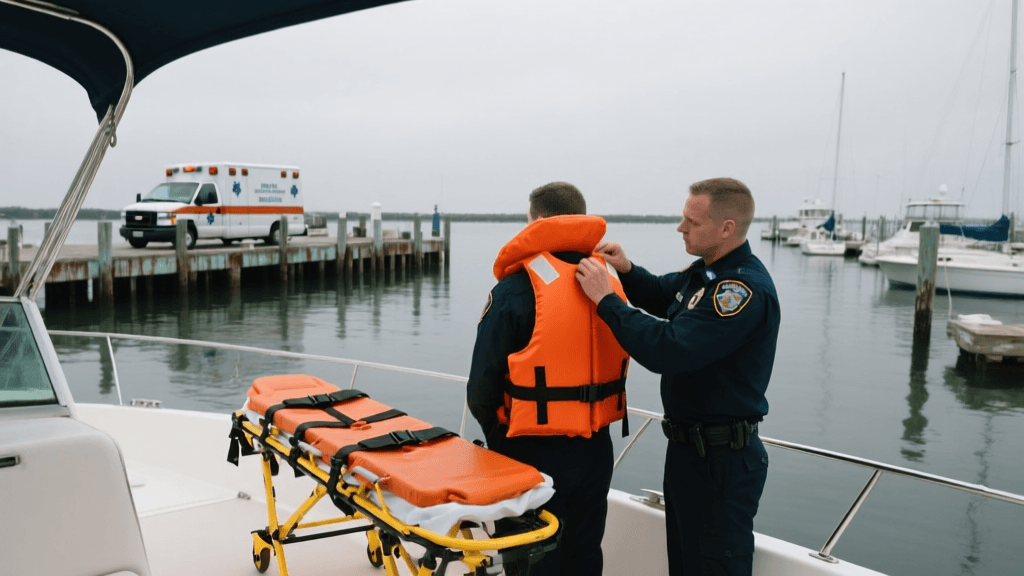
First, make the scene safe and arrange appropriate medical attention. If the situation is urgent, contact emergency services and follow their instructions. Once immediate needs are addressed, record the date, time, location, weather and water conditions, vessel details, and a factual description of what happened. Gather names and contact information for the injured person, operator, passengers, and witnesses, and take photographs of relevant areas of the boat or visible hazards when it is safe and appropriate. Keep medical bills, discharge instructions, receipts, and claim correspondence together. Notify the insurer promptly in accordance with the policy, provide accurate information, and keep copies of anything submitted.
Local Considerations for Long Island Boat Owners
Long Island residents may keep a boat near the coast while living inland in communities such as Plainview, Hicksville, Bethpage, Syosset, Woodbury, Jericho, Levittown, or Farmingdale. The place where an owner lives does not necessarily determine how a policy responds; the insured vessel, accident circumstances, navigation territory, and policy language matter. Boaters launching or traveling around Huntington, Melville, Massapequa, or Wantagh should check that their stated navigation area matches their intended trips and that passengers understand basic safety procedures. New York boating rules and emergency requirements may also apply to an incident. For current requirements, consult official state and local authorities rather than relying on assumptions or outdated summaries.
Practical Takeaways Before You Launch
A Simple Coverage and Claim Checklist
- Check the declarations page for the MedPay limit, then read the policy to learn who qualifies and which expenses may be eligible.
- Confirm the vessel, navigation territory, and intended use are accurately described on the policy before a trip.
- After an injury, put safety and medical care first; document facts and witnesses only when doing so will not delay help.
- Notify the insurer within the policy’s required timeframe and retain itemized bills, receipts, and copies of communications.
- Ask the insurer how MedPay, liability coverage, and health insurance may coordinate for the specific claim.

What to Do Next
If an injury has already happened, follow medical advice, report the incident promptly, and ask the insurer which forms and records are needed to evaluate a MedPay claim. Do not wait to gather every document before giving required notice; you can ask how to supplement the file as bills and treatment records arrive. If you are reviewing coverage before the next outing, compare available limits, covered-person definitions, exclusions, deductibles if any, and navigation provisions rather than looking at price alone. A licensed insurance professional can explain policy language and help identify questions to raise, while only the insurer can determine how a specific claim is handled under the contract. Keep the policy and emergency contacts accessible aboard.
Review Your Boat Medical Payments Coverage
Compare policy limits and terms before your next Long Island boating trip so you know what questions to ask if an injury occurs.
Get a Free Quote