

What Water Sports Coverage Means for Long Island Boat Owners
Water sports coverage is liability protection associated with operating a boat while towing or participating in activities such as tubing, wakeboarding, and water skiing. Depending on the policy, it may help pay covered bodily injury or property damage claims if the operator is legally responsible for an accident. It is not a guarantee that every tow-sports incident is covered: definitions, operator qualifications, equipment requirements, exclusions, and liability limits vary. For Long Island boat owners, checking these terms before launching is especially important when family members or guests take turns driving, observing, or riding. Ask the insurer to confirm in writing which activities and vessels are included.
Why Tow-Sports Protection Matters Around Long Island
Long Island boating can involve busy, changing conditions, from crowded launch areas and marinas to open bays and coastal waterways. Boat traffic, wakes, changing weather, reduced visibility, and swimmers or personal watercraft nearby can raise the chance of a collision or injury during a tow-sports outing. Conditions differ by location and day, so operators should consult current navigation information and local rules rather than assume a familiar route is always safe. New York boating requirements and applicable navigation rules still govern operation; insurance does not replace required safety equipment, boater education, or responsible supervision. A coverage review can help identify gaps before a weekend trip from a nearby community such as Plainview or Huntington.
What Water Sports Liability May Cover
A water-sports liability endorsement or policy feature may respond when a covered boat operator is held legally responsible for a covered injury to a rider, passenger, or another person, or for damage to someone else’s property. For example, a rider could be injured after a fall, or a tow line or boat maneuver could contribute to damage involving another vessel. The policy may provide defense costs as described in its terms, but limits and conditions apply. Physical damage to your own boat, medical payments, injuries to household members, racing, paid instruction, and certain high-risk activities may be handled differently or excluded. Read the declarations and full policy wording, and ask specifically whether tubing, skiing, and wakeboarding are covered.
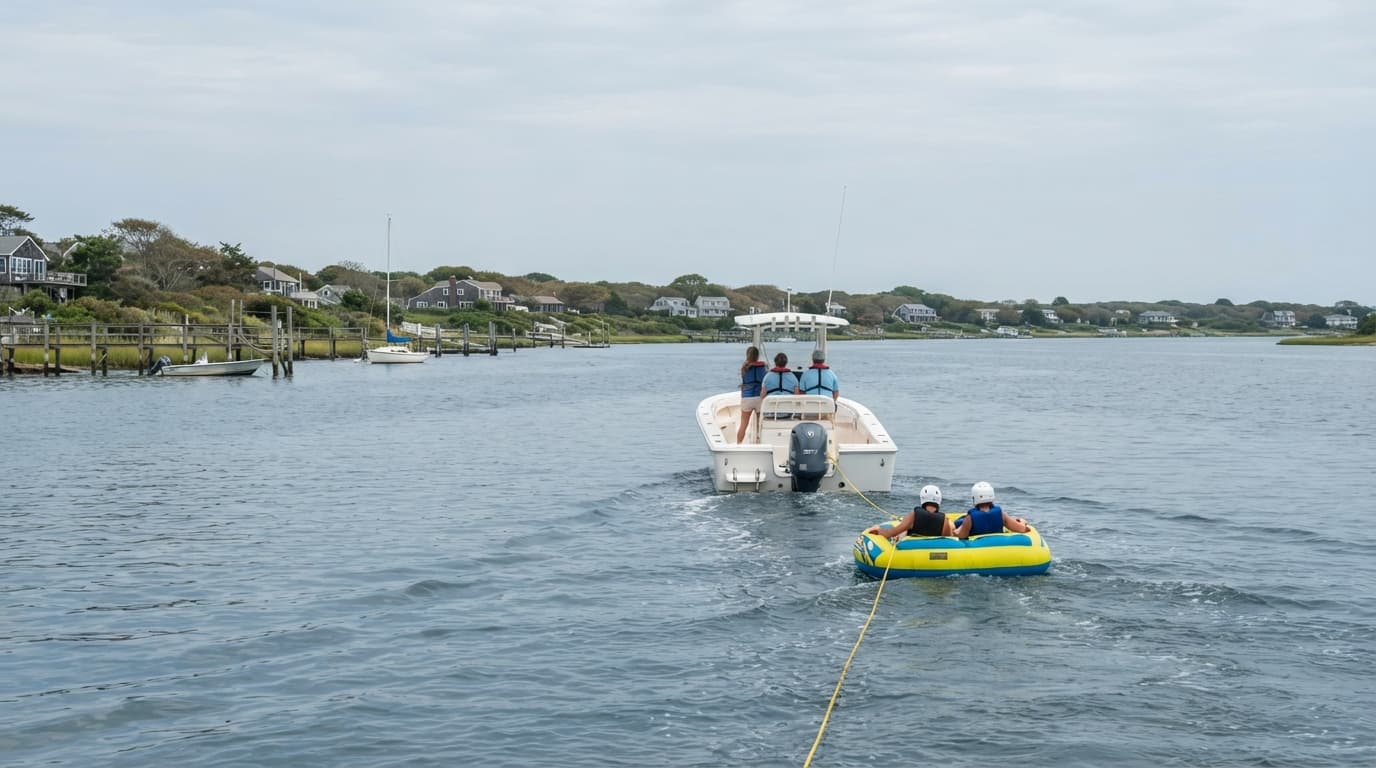
- Confirm that tubing, wakeboarding, water skiing, and any other planned activity are included by name or within the policy definition.
- Check the bodily injury and property damage liability limits, and ask whether a personal umbrella policy can extend protection.
- Ask about operator age, experience, approved-driver rules, passenger restrictions, and any required observer or safety equipment.
- Review exclusions, deductibles, territory limits, and how the policy treats injuries to passengers, household members, or paid participants.

Factors That Can Affect Water Sports Coverage and Cost
There is no single water-sports coverage price for every Long Island boat owner. A quote may reflect the boat’s type, length, value, engine, age, and use, along with the requested liability limits, deductible, claims history, operator experience, storage, and navigation area. The insurer may also consider whether the boat is used privately, rented, used for instruction, or involved in organized competition. Details matter: an insurer may rate or restrict tow-sports use differently from casual cruising. Provide accurate information about who operates the boat and what activities occur, then compare equivalent limits and exclusions rather than choosing by premium alone. Ask for written clarification of any surcharge, endorsement, or activity restriction before binding coverage.
How a Water-Sports Liability Claim Works
After an incident, first address immediate safety: stop the boat when safe, assist injured people, contact emergency services when needed, and follow applicable reporting requirements. Exchange information with the other parties and witnesses, record the location and time, and take photographs if doing so is safe. Notify the insurer promptly using the claim instructions in the policy; late notice can complicate review. Avoid admitting legal fault or promising payment, while cooperating truthfully with the claims representative. The insurer will assess the policy, statements, records, and available evidence, and explain whether the event falls within coverage. Keep copies of medical, repair, and incident documents, and ask about deadlines and next steps because investigation times vary.
Common Misunderstandings About Tow-Sports Insurance
A common mistake is assuming ordinary boat liability automatically covers every person and activity connected with towing. The actual policy wording controls, and some contracts limit coverage by activity, operator, vessel, location, or use. Another misconception is that a rider’s personal health insurance or a boat’s medical-payments benefit replaces liability protection; those coverages serve different purposes and may have separate limits and exclusions. A life jacket, spotter, and safe operating habits reduce risk but do not change the insurance contract. Owners also sometimes overlook informal use by a friend or relative. Before lending the boat, verify who is an insured or approved operator and whether the intended water sport remains covered.
Choosing Limits and Deductibles
Choose water-sports liability limits by considering the potential severity of an injury, the value of assets you want to protect, the number of passengers, and how frequently the boat is used for towing. There is no universal limit that fits every household, and a higher limit generally affects premium. Ask an insurance professional to compare available bodily injury and property damage limits and explain whether limits apply per person, per occurrence, or in another way. Consider how a boat policy coordinates with any umbrella coverage, including whether the umbrella accepts tow-sports exposure. Deductibles commonly apply to physical damage rather than liability, but policy structures differ. Review the actual declarations and endorsements instead of relying on a general quote summary.
How to Get Water Sports Coverage in Long Island, NY
Start by gathering the boat’s registration and specifications, intended navigation area, estimated annual use, operator details, and a clear list of planned activities. When requesting a quote in Long Island, NY, state whether you tow tubes, wakeboards, or water skiers and whether anyone else may operate the boat. Compare written proposals for the same liability limits, deductibles, named activities, exclusions, and operator conditions. Boat owners in Plainview, Hicksville, Bethpage, Syosset, Woodbury, Jericho, Levittown, Farmingdale, Melville, Huntington, Massapequa, and Wantagh can use the same checklist when discussing coverage options. Before paying or launching, confirm the effective date and obtain the policy documents; only the issued contract determines coverage.
Review Your Tow-Sports Protection
Gather your boat and operator details, then request a coverage review that clearly addresses the water sports you plan to enjoy.
Get a Free QuoteAnswers to Boat Insurance Basics
It may provide liability protection for covered bodily injury or property damage claims arising from activities such as tubing, wakeboarding, or water skiing. Coverage depends on the policy’s definitions, limits, exclusions, and operator requirements, so confirm each planned activity with the insurer.
The cost varies with boat details, use, operator history, liability limits, navigation area, and insurer rules. Request quotes using the same limits and activity details, and compare exclusions and deductibles as well as the premium.
Provide the insurer with your boat specifications, navigation area, operators, and every planned tow-sports activity. Ask for written confirmation of coverage, limits, exclusions, and any operator or safety conditions before the policy begins.
Whether a separate endorsement is required depends on your policy and intended use; do not assume standard boat liability covers towing activities. New York boating and navigation requirements still apply, so review both legal safety obligations and your policy terms.
It may, if the incident is covered and the policy’s insured-person, activity, and liability terms apply. Coverage can vary for passengers, household members, and other guests, so ask the insurer about the exact situation and applicable limits.
Water-sports liability generally concerns covered claims by others, not automatic payment for damage to your own boat. Your policy’s physical damage coverage, deductible, exclusions, and cause-of-loss terms determine whether boat repairs may be covered.
Get Your Boat Coverage Started
Compare boat insurance options tailored to Long Island waterways in minutes.
Related Articles
Learn more about water sports coverage in long island, ny with these expert guides
Water Sports Coverage
Which Water Sports Should Long Island Boat Owners Discuss With Their Insurer?
Water sports can affect how a boat insurance policy applies, but coverage depends on the policy’s wording, endorsements,...